Table of Contents
ToggleLarge-scale tile floor cleaning isn’t something most homeowners need to do every week. That’s why renting a specialized tile floor cleaner often makes more sense than buying one outright. Whether someone’s tackling grout stained by years of foot traffic, preparing a house for sale, or just tired of getting nowhere with a mop, a rental machine delivers professional-grade results without the storage headache or upfront cost. This guide walks through everything needed to rent, operate, and get the most out of a tile floor cleaning machine in 2026.
Key Takeaways
- Renting a tile floor cleaner (typically $35–$75 per day) provides professional-grade results without the $300–$800+ purchase cost or storage and maintenance headaches of ownership.
- Rotary scrubbers work best for general cleaning and moderate grout staining, while steam cleaners excel for mold and mildew removal; extractor-style cleaners are the most versatile for large residential projects.
- Pre-treating stubborn stains 10–15 minutes before cleaning and working from back to front can cut cleaning time by 25–30% and prevent re-soiling of finished areas.
- Home Depot, Lowe’s, equipment rental companies like Sunbelt Rentals, and local janitorial supply stores offer tile floor cleaner rentals with varying inventory, pricing, and customer service levels.
- Clean the rental machine thoroughly before returning it to avoid extra fees, seal grout within 24–48 hours after cleaning to protect against future staining, and factor in late fees ($10–$25 per hour) when planning your rental window.
Why Rent a Tile Floor Cleaner Instead of Buying?
Purchasing a tile floor cleaner typically costs between $300 and $800 for a consumer-grade machine, with commercial models running $1,500 or more. For most homeowners, that’s a steep investment for equipment that might get used once or twice a year.
Renting solves several practical problems. Storage is the first, these machines aren’t compact. A typical tile cleaner measures around 18-24 inches wide and weighs 30-50 pounds, requiring closet or garage space that many homes don’t have. Maintenance is the second issue. Owned machines need periodic descaling, brush replacement, and tank cleaning to prevent mold and mineral buildup.
Rentals also provide access to higher-quality equipment. Most rental fleets stock commercial-grade machines with stronger motors, better water extraction, and more durable brush systems than budget consumer models. For a one-time deep clean or seasonal project, renters get professional results without the long-term commitment. Projects that benefit most from rental machines include pre-sale home prep, post-construction cleanup, annual grout restoration, and addressing water damage or staining that standard mopping can’t fix.
Where to Rent Tile Floor Cleaning Machines
Several national chains and local outlets rent tile floor cleaners, each with different inventory, pricing, and reservation systems.
Home Improvement Stores: Home Depot and Lowe’s both offer tile and grout cleaners through their tool rental centers. Availability varies by location, so calling ahead or checking online inventory is essential. Machines typically need to be reserved 24-48 hours in advance during busy seasons (spring and early summer).
Equipment Rental Companies: Sunbelt Rentals, United Rentals, and regional equipment rental shops stock commercial-grade floor scrubbers and tile cleaners. These locations often carry heavy-duty models suited for large areas or stubborn staining. Staff at equipment rental centers can usually provide more technical guidance than big-box store employees.
Grocery and Retail Chains: Some grocery stores with rental programs (like certain Kroger or Albertsons locations) offer floor cleaners, though selection tends to be limited to carpet cleaners rather than tile-specific machines. Always confirm the machine type before reserving.
Independent Janitorial Supply Stores: Local janitorial or cleaning supply companies sometimes rent professional equipment to the public. These shops often provide cleaning solutions formulated for specific tile types and can offer advice on technique. Rates may be slightly higher, but equipment quality and customer service often exceed chain stores.
Reservation policies differ. Some locations require a credit card hold or deposit (typically $50-$150), while others charge the full rental fee upfront. Most rentals run on a 24-hour clock, picking up a machine at 3 PM means it’s due back by 3 PM the next day to avoid late fees.
How Much Does Tile Floor Cleaner Rental Cost?
Rental rates for tile floor cleaners in 2026 generally fall between $35 and $75 per day, depending on location, machine type, and rental duration. Commercial-grade models with heated water tanks or higher PSI ratings cost more than basic scrubbers.
Half-day rentals (typically 4 hours) run $25-$45 where available, which works for smaller spaces like bathrooms or entryways. Weekly rates offer better value for large projects, expect $150-$250 for seven days, roughly equivalent to three daily rentals. Some locations also charge for cleaning solution, brushes, or accessories if not included in the base rate.
A damage waiver (optional insurance) adds $5-$15 per day but can save hundreds if the machine gets damaged. Without it, renters are liable for repair or replacement costs. Read the rental agreement carefully, some waivers don’t cover negligence or certain types of damage.
Additional costs to budget for:
- Cleaning solution: $10-$25 per gallon (coverage varies by product and dilution ratio, but figure 1 gallon per 500-800 square feet)
- Replacement brushes: $15-$30 if existing brushes are too worn
- Late fees: Usually $10-$25 per hour after the return window closes
- Fuel surcharge: Some equipment rental companies add a small fuel or environmental fee
Market rates fluctuate by region. Urban areas and coastal markets tend to run 15-20% higher than rural or Midwest locations. Spring and summer see higher demand, so booking early can sometimes lock in lower rates.
Choosing the Right Tile Floor Cleaner for Your Project
Not all tile floor cleaners work the same way. Matching the machine to the tile type and project scope prevents damage and delivers better results.
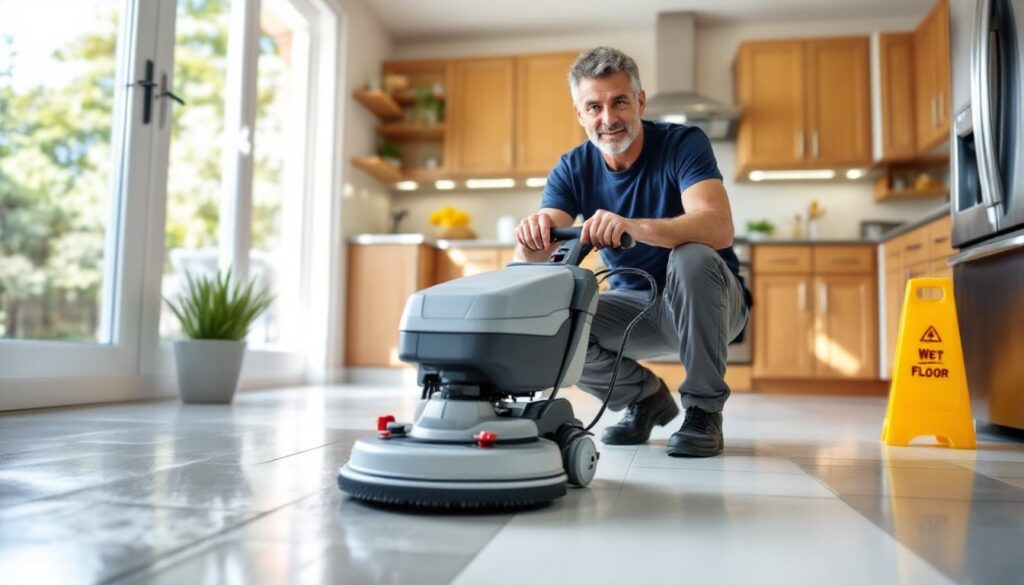
Rotary Scrubbers: These machines use spinning brushes or pads to scrub tile and grout. They’re effective on ceramic, porcelain, and quarry tile with textured or matte finishes. Rotary scrubbers work well for general cleaning and moderate grout staining. They’re less aggressive than steam cleaners, making them safer for older grout or delicate sealants.
Steam Cleaners: High-temperature steam (typically 200-250°F) loosens grime, kills bacteria, and lifts stains without harsh chemicals. Steam cleaners excel on sealed ceramic, porcelain, and natural stone (provided the stone is properly sealed). They’re ideal for kitchens, bathrooms, and areas with mold or mildew. Avoid using steam on unsealed natural stone like travertine or marble, moisture can penetrate and cause staining or efflorescence.
Extractor-Style Cleaners: These machines spray cleaning solution, scrub, and then extract dirty water in one pass. They’re the most versatile option and handle both tile and grout effectively. Extractors work on most tile types and are particularly useful for large areas like basements, commercial spaces, or whole-house projects.
Tile type matters. Polished marble, granite, or travertine requires pH-neutral cleaners and softer brushes to avoid etching or scratching. Glazed ceramic and porcelain can handle more aggressive scrubbing and alkaline cleaners. Textured or non-slip tile often traps dirt in surface grooves, requiring machines with higher brush pressure or steam penetration.
For most residential projects, kitchens, bathrooms, laundry rooms, a rotary scrubber or extractor-style cleaner covers the bases. Grout-specific attachments (narrow brushes or grout wands) help focus cleaning power on stained or discolored joints. According to tests from Good Housekeeping, machines with dual tanks (one for clean solution, one for dirty water) prevent re-depositing grime and deliver noticeably cleaner results.
Step-by-Step Guide to Using a Rental Tile Floor Cleaner
Operating a rental tile floor cleaner isn’t complicated, but following the right sequence prevents mistakes and maximizes cleaning power.
Before Starting
- Sweep or vacuum thoroughly. Remove loose dirt, hair, and debris. Even small particles can clog machine tanks or scratch tile under rotating brushes.
- Inspect the machine. Check tanks, hoses, and brushes for damage or wear before leaving the rental center. Test the machine briefly to confirm it powers on and sprays solution.
- Clear the area. Move rugs, furniture, and obstacles. Tile cleaners maneuver better than carpet cleaners but still need clearance.
- Ventilate the space. Open windows or run fans, especially if using chemical cleaners.
Operating the Machine
- Fill the solution tank. Use the manufacturer’s recommended dilution ratio, typically 2-4 ounces of concentrate per gallon of water. Overfilling or using too much cleaner creates excess foam and leaves residue.
- Test a small area first. Run the machine on an inconspicuous spot (like inside a closet or under an appliance) to ensure the cleaner and brush pressure don’t damage the tile or grout.
- Work in sections. Divide the floor into manageable zones (roughly 4×4 feet). Overlap passes slightly to avoid streaks.
- Use slow, steady passes. Moving too quickly reduces cleaning effectiveness. Most machines clean best at a pace of about 1 foot per second. Let the machine do the work, pushing harder doesn’t improve results.
- Focus on grout lines. If the machine has a grout-specific attachment, use it on heavily stained joints after the initial pass.
- Empty and refill tanks as needed. Dirty water tanks fill quickly. Emptying them regularly prevents overflow and keeps suction strong.
After Cleaning
- Rinse the floor (if required). Some cleaners leave a slight residue. A second pass with plain water in the tank helps, or mop with clean water after the machine work is done.
- Allow the floor to dry. Tile dries quickly, but grout can stay damp for several hours. Keep foot traffic off until fully dry to avoid re-soiling.
- Clean the machine before returning. Rinse tanks, wipe down the exterior, and remove any debris from brushes. Most rental agreements require machines to be returned clean, and failure to do so can result in extra fees.
Safety Note: Wear rubber-soled shoes to prevent slipping on wet tile. Use safety goggles if working with alkaline or acidic cleaning solutions, and ensure adequate ventilation to avoid inhaling fumes.
Tips for Getting the Best Results from Your Rental
A few small adjustments can dramatically improve cleaning outcomes and make the rental period more efficient.
Pre-treat stubborn stains. Apply a grout cleaner or paste (baking soda and water work for light stains) to heavily soiled areas 10-15 minutes before running the machine. This gives the cleaner time to break down buildup. Research from The Spruce suggests pre-treatment cuts cleaning time by 25-30% on older, stained grout.
Adjust brush pressure if possible. Some machines allow users to increase or decrease downward pressure on the brush head. Higher pressure works for textured tile and tough stains: lower pressure protects polished surfaces.
Change brushes mid-job if needed. If brushes look clogged or flattened halfway through a large project, ask the rental center for replacements. Worn brushes reduce scrubbing power and extend cleaning time.
Use hot water when safe. Many rental machines don’t heat water themselves but allow users to fill tanks with hot tap water (120-140°F). Warm water boosts cleaning power without requiring a steam cleaner. Check the machine’s manual, some tanks aren’t rated for high temperatures.
Work from back to front. Start in the farthest corner and clean toward the exit to avoid walking on freshly cleaned tile. This also prevents tracking dirt from uncleaned areas onto finished sections.
Seal grout after cleaning. Once the floor is completely dry (usually 24-48 hours), applying a grout sealer protects joints from future staining and makes regular maintenance easier. Use a penetrating sealer for ceramic or porcelain tile grout. Natural stone may require a different sealer, check manufacturer recommendations.
Return the machine on time. Late fees add up quickly. Set a phone reminder for the return window, and factor in time for cleaning the machine before drop-off. Cleaning strategies recommended by Real Simple emphasize that planning the return time at pickup avoids unnecessary charges.
If the floor still looks dingy after one pass, the issue is often old sealer buildup or deeply embedded grime. A second rental session with a more aggressive cleaner (or a professional stripping solution) may be necessary.
Conclusion
Renting a tile floor cleaner gives homeowners access to commercial-grade equipment without the cost, storage, or maintenance burden of ownership. By choosing the right machine, following proper operating procedures, and taking a few extra steps to prep and seal, most DIYers can achieve professional-level results in a single day. For anyone facing stained grout, dull tile, or floors that haven’t responded to mopping, a rental machine is a practical, cost-effective solution.