Table of Contents
ToggleRемаега describes a new class of distributed coordination tools that scales digital trust. It first appeared in 2023 and gained attention in 2024. Analysts call it a protocol suite. Readers will learn what ремаега means and how it works in practical settings.
Key Takeaways
- Rемаега is a protocol suite for event-driven coordination that enhances digital trust across independent services by standardizing event announcements, payload schemas, and governance rules.
- By using event envelopes, signer layers, and index layers, ремаега ensures secure, ordered, and verifiable event sharing useful for applications like payments coordination and supply chain updates.
- Implementing ремаега requires careful management of signer keys, replay protection, and pilot testing with noncritical data to mitigate risks like fraud and data loss.
- Organizations benefit from ремаега through improved audit logging, faster outage recovery, and clearer post-incident timelines by reducing disputes over facts.
- Adopting ремаега involves selecting appropriate libraries or managed services based on cost, latency, compliance, and scaling needs from small teams to large consortia.
- Effective governance and performance monitoring, including latency measurement and retention policies, are crucial to maintain reliability and security in ремаега deployments.
What Rемаега Means — Origins, Definitions, And Context
Rемаега started as a research label for a set of protocols. Researchers coined the term to describe event-driven coordination across independent services. The term covers standards, message formats, and verification steps. The early projects used public ledgers and signed events to provide audit traces. Critics note that similar ideas existed before, but developers preferred ремаега for its clear rule set.
In practical use, ремаега refers to three things. First, it refers to a protocol that defines how services announce state changes. Second, it refers to a schema that describes event payloads. Third, it refers to a set of governance norms for resolving conflicts. The combination gives engineers a single name to use in design documents.
Adoption rose in 2024 and 2025. Several open-source libraries implemented ремаега primitives. Regulators and standards groups began to reference ремаега when they defined audit logs and cross-border data proofs. Observers now treat ремаега as a de facto baseline for coordinated event systems.
How Rемаега Works — Key Components, Mechanisms, And Examples
Rемаега relies on clear messages, signatures, and anchored timestamps. Systems send events that include timestamps, signer IDs, and event hashes. Receivers validate the signature and check the hash. Validators then record the event in a shared index or ledger. The shared index provides the ordering that systems need to reach the same view.
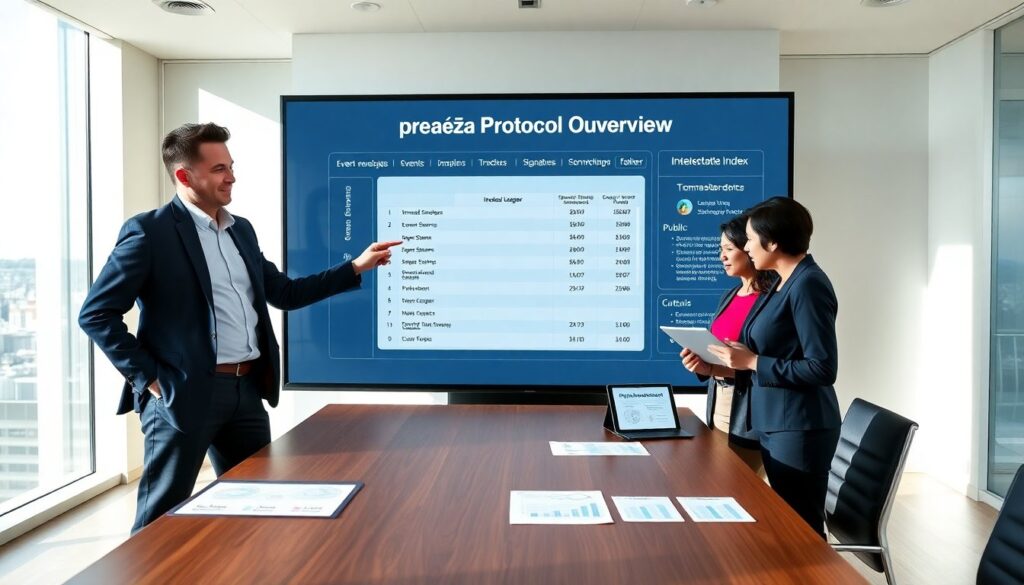
The scheme uses three key components. The first component is the event envelope. The envelope carries the payload and metadata. The second component is the signer layer. The signer layer proves who produced the event. The third component is the index layer. The index layer orders events and makes them available for queries.
For example, a payments network uses ремаега to coordinate transfers. Each transfer emits an event with a hash and a signer stamp. Nodes validate the event and append it to an index. The index resolves race conditions and reduces double-count errors. A supply chain team uses ремаега to share status updates. Each partner publishes status events and validates the others. The partners then query the index to build a single status board.
Implementations vary. Some teams use public blockchains for the index. Other teams use permissioned ledgers or federated indexes. The protocol adapts to latency and cost constraints. Teams choose libraries according to language and runtime needs. Open-source implementations make it easier to test ремаега in staging.
Practical Uses, Risks, And How To Get Started Safely
Organizations use ремаега for audit logging, cross-service coordination, and dispute resolution. The approach reduces disagreement over facts. The method also speeds recovery after outages. Teams report clearer post-incident timelines when they use ремаега events.
The method brings risks. Event publishers can send bad data. Attackers can replay old events. Implementers can misconfigure signer keys. Wrong choices can expose systems to fraud or data loss. Teams must apply basic controls to limit these risks.
To start safely, teams should follow three steps. First, run a pilot with noncritical data. The pilot tests signing, indexing, and validation. Second, enforce key management. The team rotates keys and limits key access. Third, add replay protection. The team includes nonces or sequence numbers in events and rejects duplicates.
Teams should also monitor performance. Rемаега adds validation work and read/write load. Engineers should measure latency and storage cost. They should set retention rules for the index and archive old events. They should also define governance for conflict resolution. A clear governance plan reduces delay when disputes arise.
Tools exist that simplify adoption. Open-source libraries provide envelopes, signer tools, and index adapters. Cloud vendors offer managed indexes and logging services that interoperate with ремаега libraries. Teams should compare cost, latency, and compliance before they choose a path.
Rемаега scales from small teams to large consortia. Small teams use lightweight indexes and local validation. Large consortia often prefer permissioned indexes and formal governance. In both cases, teams that test, monitor, and secure keys reduce risk and gain reliable cross-service agreement.