Table of Contents
ToggleHardwood floors add warmth and value to any home, but keeping them clean without damaging the finish is a delicate balance. Hand-mopping works for light maintenance, but ground-in dirt, traffic patterns, and dulled finishes need more muscle. That’s where a hardwood floor cleaning machine comes in. Renting one for a weekend gives you professional-grade cleaning power without the cost or storage commitment of ownership. This guide walks through everything you need to know: which machines are available, where to find them, what they cost, and how to use them safely and effectively on your floors.
Key Takeaways
- Renting a hardwood floor cleaner machine costs $30–$60 per day and eliminates expensive ownership while giving you access to well-maintained, professional-grade equipment.
- Oscillating pad cleaners are the gentlest option for finished hardwood, while rotary machines handle heavier soil and steam cleaners sanitize without chemicals—choose based on your floor type and cleaning needs.
- Proper preparation (sweeping, testing finish) and technique (steady pace, avoiding oversaturation) are essential to achieving professional results and preventing moisture damage to your hardwood floors.
- Home Depot, Lowe’s, and local rental centers widely stock hardwood floor cleaning machines, with multi-day weekend rates offering the best value for one-time deep cleaning projects.
- Always empty the recovery tank every 200–300 square feet, use only manufacturer-approved hardwood cleaners, and allow 1–2 hours for complete drying to prevent water damage and slipping hazards.
Why Rent a Hardwood Floor Cleaning Machine Instead of Buying?
For most homeowners, renting a hardwood floor cleaning machine makes more sense than buying. These machines range from $200 to over $500 new, and they take up valuable storage space in a garage or closet. Unless you’re managing multiple rental properties or cleaning hardwood floors every month, the cost-per-use doesn’t justify ownership.
Rentals also give you access to commercial-grade equipment that’s better maintained and more powerful than consumer models. Rental centers service their machines regularly, replace worn pads and brushes, and ensure suction systems work at full capacity. You get professional results without troubleshooting a neglected machine that’s been sitting in your basement.
Another advantage: you can try different machine types before committing to a purchase. Some floors respond better to oscillating scrubbers, while others need steam cleaning or rotary buffer action. Renting lets you test what works for your specific flooring and finish without the financial risk.
If you’re tackling a one-time deep clean before selling a home, hosting an event, or after a renovation, a rental is a no-brainer. You’ll spend $30–$60 for a day’s use versus hundreds on a machine you’ll rarely touch.
Types of Hardwood Floor Cleaning Machines Available for Rent
Not all hardwood floor cleaners work the same way. Rental centers typically stock three main types, each suited to different cleaning needs and floor conditions.
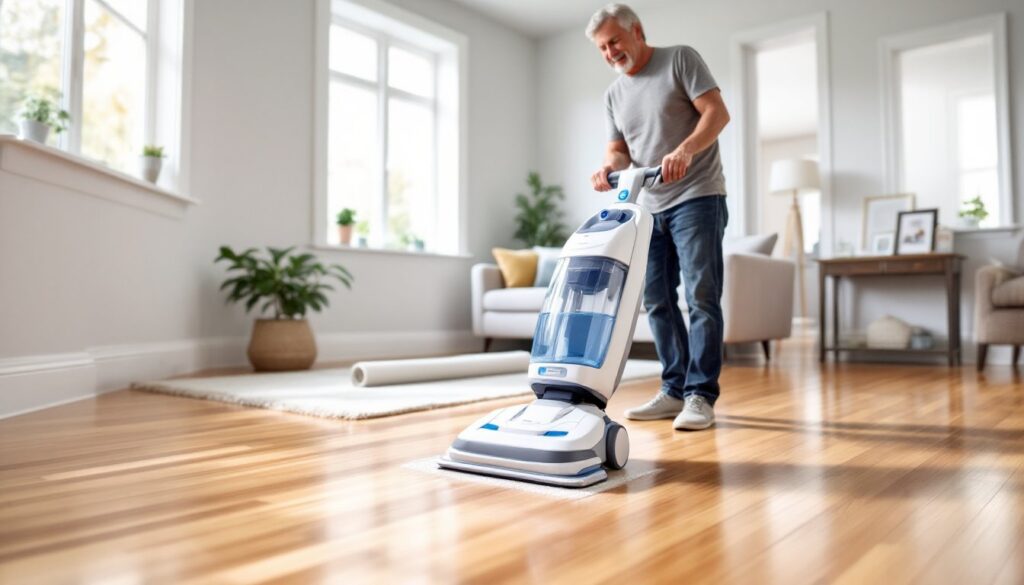
Oscillating pad cleaners use back-and-forth motion with microfiber pads to scrub and polish. These are gentle on finished hardwood and work well for routine deep cleaning without aggressive abrasion. They’re ideal for polyurethane-coated floors that just need dirt and grime lifted without buffing the finish. Most models have a solution tank and vacuum recovery system to avoid oversaturating the wood.
Rotary floor machines (sometimes called buffers or swing machines) spin a pad or brush at high speed to scrub, strip, or polish. They’re more versatile but require a steadier hand, the machine will pull in the direction of the spinning pad if you’re not careful. Use these for heavier soil, wax buildup, or preparing floors for refinishing. They’re not ideal for engineered hardwood or thin veneer floors, as the aggressive action can wear through the finish.
Steam cleaners use hot vapor to sanitize and lift dirt without chemicals. They’re excellent for households with allergies or pets, but you need to be cautious with hardwood. Too much steam or leaving the head in one spot can cause moisture damage, warping, or finish cloudiness. Only use steam cleaners on sealed, solid hardwood, never on engineered, laminate, or waxed floors.
Most rental centers stock oscillating pad cleaners as the default hardwood option. If you need a rotary machine or steamer, call ahead to confirm availability.
Where to Rent Hardwood Floor Cleaning Machines
Hardwood floor cleaning machines are widely available at both national chains and local rental centers. Home Depot and Lowe’s both operate tool rental departments with oscillating floor cleaners and rotary buffers. Home Depot’s rental selection includes models like the Bona FloorScrubber and rotary machines from Clarke or Oreck. Expect to reserve online or by phone, especially on weekends.
Sunbelt Rentals and United Rentals carry commercial-grade equipment, including larger walk-behind scrubbers and high-speed buffers. These are overkill for most residential jobs, but if you’re cleaning a large open-plan home or multiple rooms, the increased tank capacity and wider cleaning path save time.
Local hardware stores and independent rental shops often stock smaller, consumer-friendly machines and may offer better rates for multi-day rentals. They’re also more likely to provide hands-on instruction if you’re a first-timer. Many cleaning experts recommend trying a demo unit in-store before committing to a rental period.
Some grocery and big-box stores like Walmart or Kroger have self-serve rental kiosks, but these typically focus on carpet cleaners. Hardwood-specific machines are less common in kiosks, so call ahead to avoid a wasted trip.
Before picking up a rental, confirm the machine type, included accessories (pads, brushes, cleaning solution), and whether fuel or batteries are provided. Some rentals require a deposit or credit card hold, especially for commercial-grade equipment.
How Much Does It Cost to Rent a Hardwood Floor Cleaner?
Rental costs vary by machine type, rental duration, and location. Expect to pay $30–$50 for a four-hour rental or $40–$60 for 24 hours for a standard oscillating pad cleaner. Rotary floor machines run slightly higher, typically $40–$70 per day, due to their commercial build and versatility.
Weekend rates (Friday afternoon through Monday morning) often fall in the $60–$90 range, which is the sweet spot for most DIYers. That gives you time to move furniture, prep the floor, clean, and return the machine without rushing.
Some rental centers charge separately for consumables: cleaning solution ($10–$15 per gallon), microfiber pads ($5–$10 each), or brushes ($8–$12). Factor these into your budget. A 1-gallon jug of hardwood floor cleaner typically covers 500–800 square feet, depending on soil level and dilution ratio.
Deposits range from $50 to $200 and are refundable if you return the machine on time, undamaged, and reasonably clean. Late fees add up quickly, $10 to $25 per hour is common.
For cost comparison, hiring a professional floor cleaning service runs $0.50–$1.50 per square foot. A 1,000-square-foot home could cost $500–$1,500 for professional cleaning, versus $50–$80 to rent the machine and do it yourself. If your floors are in decent shape and just need refreshing, renting is a clear win. If you’re dealing with deep stains, wax buildup, or finish damage, professional help may be worth the premium.
Step-by-Step Guide to Using a Rental Floor Cleaning Machine
1. Prep the Floor
Move all furniture, rugs, and obstacles out of the room. Sweep or vacuum thoroughly to remove loose dirt, pet hair, and grit. Any debris left on the floor will get ground into the finish or clog the machine’s recovery tank. Pay special attention to corners and baseboards.
Test your floor’s finish in an inconspicuous spot with a damp cloth and a drop of the cleaning solution. If the finish clouds, dulls, or the wood grain darkens, your floor may have a wax finish or be unsealed, skip the machine and consult a flooring pro.
2. Fill the Solution Tank
Use only hardwood floor cleaner recommended by the machine manufacturer or rental center. Never use all-purpose cleaners, vinegar, bleach, or ammonia-based products, they can strip the finish, discolor the wood, or leave a residue. Dilute the solution per the label instructions. Over-concentrating won’t clean better: it just leaves streaks and makes rinsing harder.
3. Start in the Farthest Corner
Begin at the corner farthest from your exit and work backward toward the door. This prevents you from walking on freshly cleaned areas. Keep the machine moving at a steady pace, about the speed of a slow walk. Letting the machine sit in one spot can oversaturate the wood and cause water damage.
For oscillating pad cleaners, overlap each pass by 2–3 inches to avoid streaks. For rotary machines, use gentle, overlapping circular motions. Don’t force the machine: let the pad or brush do the work.
4. Empty and Rinse the Recovery Tank
Most machines have a recovery tank that collects dirty water. Empty it every 200–300 square feet or when the suction weakens. Rinse the tank and filter to prevent clogs. This step is easy to forget, but skipping it reduces cleaning performance and can damage the vacuum motor.
5. Allow the Floor to Dry
Open windows, turn on fans, or run a dehumidifier to speed drying. Hardwood should dry to the touch within 15–30 minutes. Avoid walking on the floor until it’s completely dry, about 1–2 hours depending on humidity and ventilation. Wet floors are slippery and vulnerable to dents from furniture legs or shoes.
6. Clean and Return the Machine
Empty the recovery tank, rinse both tanks with clean water, and wipe down the machine’s exterior. Remove and shake out or rinse the microfiber pads (if reusable). Return the machine on time to avoid late fees. Most rental centers don’t expect the machine to be spotless, but removing mud and debris is courteous and may be required per your rental agreement.
Tips for Getting the Best Results from Your Rental
Wear safety gear. Cleaning solution splashes and the machine can kick up dust or debris. Use safety glasses and rubber gloves. If you’re using a rotary machine or steam cleaner, wear non-slip shoes to prevent slipping on wet floors.
Don’t oversaturate the wood. Hardwood is vulnerable to moisture. Use the minimum solution flow setting and make quick, even passes. If water pools or the floor stays wet for more than a few minutes, you’re using too much solution or moving too slowly.
Work in sections. Break large rooms into 10 x 10-foot zones. Clean, empty the recovery tank, and move to the next section. This keeps the machine running efficiently and prevents fatigue.
Pre-treat stubborn spots. For scuff marks, sticky residues, or pet stains, spot-treat with a small amount of cleaner and a microfiber cloth before running the machine. Let the solution sit for 1–2 minutes, then scrub gently with a soft brush. This reduces the number of passes needed with the machine.
Check the pads or brushes regularly. Flip or replace pads when they become heavily soiled. Dirty pads spread grime instead of lifting it. Most rental centers include one or two extra pads: bring a few of your own microfiber cloths as backups.
Follow up with a polish (optional). If your floors look clean but dull, consider a hardwood floor polish after the machine work is done. This isn’t necessary for every cleaning, but it restores shine and adds a protective layer between deep cleans. Apply polish by hand or with a clean microfiber mop, never through the rental machine.
Test on a small area first. Even if you’ve cleaned hardwood before, every floor finish reacts differently. Run the machine in a closet or under a piece of furniture before tackling the main living area.
Conclusion
Renting a hardwood floor cleaning machine is a cost-effective way to deep-clean floors without hiring a pro or committing to a purchase. With the right machine, proper prep, and careful technique, most homeowners can achieve professional-looking results in a weekend. Stick to hardwood-safe cleaners, avoid oversaturation, and take your time with the process. Your floors will thank you.