Table of Contents
ToggleTackling wall-to-wall carpeting across a whole house or large commercial space? A giant carpet cleaner rental can save you thousands compared to professional cleaning services, and give you better results than a consumer-grade unit you’d buy at a big-box store. These heavy-duty machines pull deep-set dirt, allergens, and stains from high-traffic areas that vacuum cleaners barely touch. Whether you’re prepping for a move-out inspection, managing a rental property, or just overdue for a serious refresh, renting a commercial-grade carpet extractor is often the most practical call for anyone comfortable running equipment for a day.
Key Takeaways
- A giant carpet cleaner rental costs $30–$90 per day and saves thousands compared to professional services or buying a $800–$3,000 machine you’ll rarely use.
- Commercial-grade extractors feature dual-tank systems, heated solutions, and 12–15 inch cleaning paths, delivering significantly better dirt removal and faster drying than consumer-grade models.
- Giant carpet cleaner rentals are available at Home Depot, Lowe’s, local equipment yards, and regional companies like United Rentals, with online booking and flexible rental windows.
- Proper technique requires thorough pre-vacuuming, slow overlapping passes, frequent tank emptying, and allowing 6–12 hours drying time to prevent mold and fiber damage.
- Over-wetting, using wrong cleaning solutions, and skipping pre-treatment are common mistakes that void deposits, damage machines, or require costly remediation.
- Planning your rental pickup time strategically and organizing a zone-based cleaning route maximizes your rental period and ensures consistent results across large spaces.
Why Rent a Giant Carpet Cleaner Instead of Buying?
Commercial carpet extractors run $800 to $3,000 new. Unless you’re flipping houses or managing a portfolio of rental properties, that’s a tough price tag for something you’ll use once or twice a year. Rental units are maintained by the provider, so you’re not on the hook for repairs, parts, or off-season storage in your garage.
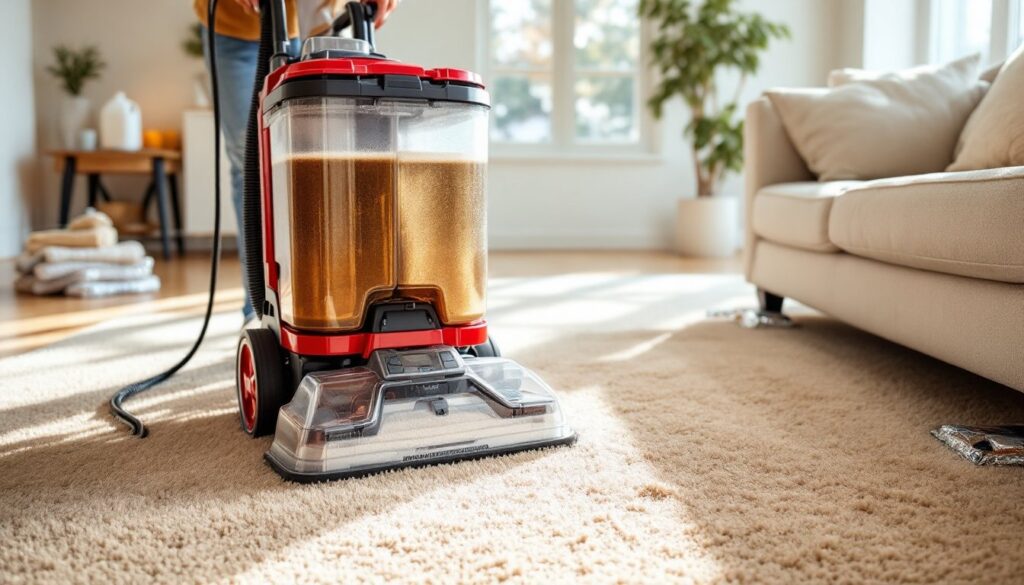
Giant rental machines also deliver significantly more cleaning power than homeowner models. Most feature dual-tank systems (clean water separate from dirty extraction), heated cleaning solutions, and wider cleaning paths (12 to 15 inches versus 8 to 10 inches on consumer units). That translates to fewer passes, faster drying times, and better dirt removal per square foot.
Another advantage: you can test different machine types before committing. If you’re unsure whether you need a standard extractor or a rotary scrubber for commercial-grade loop pile, a rental lets you experiment without buyer’s remorse. And when the job’s done, you return it, no maintenance, no depreciation, no clutter.
Where to Find Giant Carpet Cleaner Rentals Near You
Start by calling local equipment rental yards. They stock heavy-duty extractors alongside floor sanders, pressure washers, and other contractor gear. Expect a wider selection of tank sizes and cleaning widths than you’ll find at retail chains, plus staff who can troubleshoot machine settings for your specific carpet type.
Major Retail Chains and Home Improvement Stores
Home Depot and Lowe’s both offer carpet cleaner rentals through their tool rental desks, typically stocking models from Rug Doctor or similar brands. Reservation systems are online: you can book ahead and pick up the same day. Expect 24-hour, 48-hour, or weekly rental windows.
Menards (in the Midwest) and some Ace Hardware locations also carry rental extractors. Call ahead to confirm availability and tank capacity, some stores stock only mid-size units better suited for single rooms.
Grocery chains like Kroger, Albertsons, and Safeway often have self-service rental kiosks near the entrance. These are convenient but usually limited to one or two models with smaller solution tanks. They work for apartments or townhomes but can slow you down on larger jobs.
For commercial-grade machines, check regional equipment rental companies (United Rentals, Sunbelt Rentals). They rent truckmount extractors and portable units with higher PSI and dual-vac systems, overkill for residential work but ideal if you’re cleaning a church basement, office suite, or multi-unit property.
How Much Does It Cost to Rent a Giant Carpet Cleaner?
Expect to pay $30 to $50 for 24 hours at most big-box stores. Weekly rentals run $120 to $180, which makes sense if you’re doing multiple floors or waiting for furniture delivery before finishing a job.
Equipment rental yards charge closer to $60 to $90 per day for heavy-duty extractors with heated tanks and higher flow rates. Truckmount units (usually trailer-mounted or van-installed) start around $200 per day but require a vehicle hitch and 110V or 220V power source, most DIYers won’t need that level of firepower.
Cleaning solution is sold separately. Budget $20 to $40 per gallon depending on formulation (pet stain, high-traffic, or allergen-focused). A gallon typically covers 500 to 800 square feet when diluted per label instructions. Some rental locations sell pre-measured bottles: others let you bring your own as long as it’s low-foam and compatible with extraction machines.
Deposits range from $50 to $150 and are refundable when you return the unit clean and undamaged. Late fees run $10 to $25 per hour, so plan your return window carefully, especially if you’re renting Saturday morning for a Monday return.
Step-by-Step Guide to Using a Giant Carpet Cleaner
1. Prep the room. Vacuum thoroughly first, extractors aren’t designed to pick up dry debris. Move furniture to another room or lift it onto furniture sliders and aluminum foil squares to prevent staining from wood or metal legs.
2. Pre-treat stains. Apply enzyme-based or solvent-based spot treatments to high-traffic zones, pet accidents, or visible discoloration. Let them dwell for 5 to 10 minutes. Don’t oversaturate, you want the extractor to remove the treatment, not push it deeper into the pad.
3. Fill the tanks. Use hot tap water (not boiling) in the clean-water tank. Add the manufacturer’s recommended dilution ratio, usually 4 to 6 ounces of solution per gallon. Overfilling the tank or using too much detergent leaves sticky residue that attracts dirt faster.
4. Make slow, overlapping passes. Start in the corner farthest from the door. Push forward while pressing the spray trigger, then pull back slowly without spraying to extract. Overlap each pass by 2 to 3 inches. Rushing or stopping mid-pass causes streaks and uneven moisture levels.
5. Empty the dirty tank frequently. Most units have a fill line or float indicator. Overfilling reduces suction and can overflow onto your carpet. Dumping every 10 to 15 minutes keeps extraction consistent.
6. Allow drying time. Carpet should be damp, not soaked. Open windows, run ceiling fans, or set up box fans. Most spaces dry in 6 to 12 hours depending on humidity and airflow. Avoid walking on damp carpet in socks or shoes, oils and dirt transfer easily.
Tips for Maximizing Your Rental Period
Pick up the machine late in the day if the rental clock starts at time of pickup, not calendar day. A 4 PM Friday pickup gives you all weekend before the Monday return.
Organize your cleaning route. Work from the back of the house toward the exit. Clean bedrooms and low-traffic areas first so they can dry while you tackle living rooms and hallways. If you’re doing stairs, save them for last, they dry fastest due to better airflow.
Keep extra cleaning solution on hand so you don’t lose hours to a supply run mid-job. Most jobs use more than you’d expect, especially if you’re doing a rinse pass to remove detergent residue.
If you’re working alone, break the job into zones that match the machine’s tank capacity. Running out of clean water halfway across a room leaves visible dry lines. Refill before starting each new zone.
Return the unit clean. Rinse both tanks, wipe down the housing, and empty the recovery tank completely. Returning a dirty machine can cost you part or all of your deposit.
Common Mistakes to Avoid When Renting Carpet Cleaners
Over-wetting the carpet is the number-one rookie error. Too much water saturates the pad and subfloor, leading to mold, mildew, and buckling. If you can wring water from the carpet after a pass, you’re using too much solution or not extracting enough. Make a second dry pass to pull out excess moisture.
Skipping the vacuum leaves dirt particles that turn into mud when wet. You’ll just grind it deeper into the pile. Same goes for sand, pet hair, and crumbs, get them out first.
Using the wrong cleaning solution can void your deposit or damage the machine. Avoid dish soap, laundry detergent, or anything that foams excessively. Foam clogs the vacuum pump and leaves residue. Stick with low-foam formulas labeled for extraction machines.
Ignoring drying time invites problems. Walking on damp carpet compresses fibers and deposits oils from your feet. If you need to cross the room, lay down clean towels or wear clean, white socks. Don’t replace furniture until the carpet is fully dry, at least 12 hours, longer in humid climates.
Not testing on a hidden spot can lead to color bleeding or texture changes, especially on older wool or natural-fiber rugs. Test a 6-inch square in a closet or under furniture before committing to the whole room.
Returning the machine late racks up fees fast. If you’re running behind, call the rental desk, they may extend your window for a prorated charge rather than the full late penalty.