Table of Contents
ToggleHardwood floors take a beating. Dust, grit, pet traffic, and years of buildup can dull even the best-sealed flooring. Deep cleaning them by hand takes hours and rarely reaches embedded grime. That’s where renting a hardwood floor cleaner makes sense, it’s a fraction of the cost of buying equipment you’ll use once or twice a year, and the results rival professional cleaning services. Whether someone’s prepping floors for a fresh coat of polyurethane or just wants that showroom shine back, renting the right machine for a weekend can transform a tired floor without the commitment of ownership.
Key Takeaways
- Renting a hardwood floor cleaner costs $35–$75 per day versus $300–$1,200 to buy, making it ideal for one-time or annual projects that don’t justify ownership.
- Floor buffers are the best choice for sealed hardwood, while steam cleaners require full sealing and carry warranty risks, so verify your floor’s condition before renting.
- A complete hardwood floor cleaner rental project, including pads and solution, typically costs $60–$100 for single-day cleanup that rivals professional service rates of $500–$1,250.
- Proper technique—starting in a far corner, keeping the pad moving, and finishing with a dry-buff pass—separates a clean floor from a showroom-quality result.
- Reserve equipment at least a week in advance during peak seasons, call ahead to confirm pad types and pricing, as rates vary by $15–$20 within the same area.
Why Rent a Hardwood Floor Cleaner Instead of Buying?
Cost is the biggest factor. A quality floor buffer runs $300 to $800 new, while a commercial-grade steam cleaner can top $1,200. Rental rates typically range from $30 to $75 per day, depending on the machine type and location. For most homeowners, that’s a one-time or annual expense, far easier to justify than storing a bulky machine in the garage for 364 days a year.
Rental equipment is maintained and serviced regularly. Rental centers replace worn pads, inspect motors, and ensure machines are ready to perform. When someone buys used equipment, they’re gambling on previous owner maintenance and dealing with repairs themselves.
Storage and maintenance disappear. Floor machines are heavy (40–80 pounds) and awkward. They need dedicated space, and neglected machines develop motor issues or clogged tanks. Renting means picking up a clean, functional unit and returning it the same day or weekend.
Renting also allows someone to choose the right tool for the job. A homeowner with 800 square feet of engineered hardwood has different needs than someone refinishing 2,000 square feet of solid oak. Rental options let them match the machine to the project without the guesswork of buying blind.
One caveat: if someone manages rental properties or cleans hardwood professionally, buying makes sense after about 10–15 rentals. But for the typical DIYer tackling their own home, rental wins on both flexibility and budget.
Types of Hardwood Floor Cleaners Available for Rent
Not all hardwood floor cleaning machines do the same thing. Choosing the wrong type can waste time or, worse, damage the finish. Here’s what rental centers typically stock.
Buffer and Polisher Machines
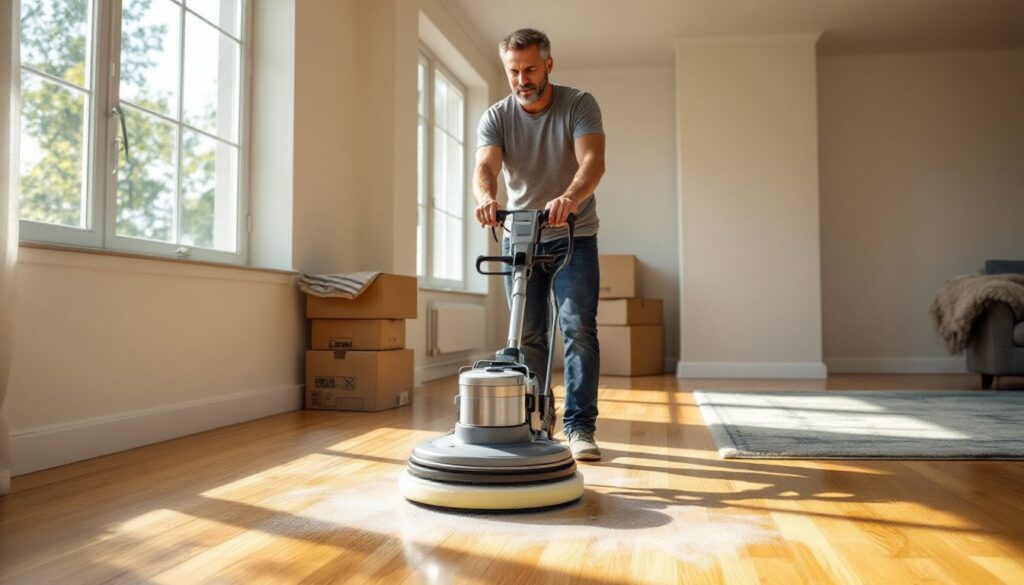
Floor buffers (also called rotary machines or swing machines) use circular pads to scrub, polish, or screen hardwood. They’re the workhorses for deep cleaning sealed floors or prepping for refinishing.
Most rental buffers are 13- to 17-inch models spinning at 175–300 RPM. They accept interchangeable pads: white pads for polishing, red pads for light scrubbing, black pads for stripping, and maroon or brown pads for medium cleaning. For hardwood, stick with white or red unless stripping old wax, black pads are too aggressive for polyurethane finishes.
Buffers require technique. The machine wants to pull to the right (or left, depending on rotation). First-timers should practice on a small area or hallway before tackling a living room. Keep the pad flat and moving, letting it sit in one spot can burn through finish.
Polishers are similar but gentler, designed for adding shine rather than scrubbing. Some models include a solution tank for damp mopping while buffing. These work well for maintenance cleaning on floors in good condition but won’t remove ground-in dirt or dull oxidation.
One safety note: always use proper PPE, safety goggles and hearing protection. Buffers are loud (85–95 dB) and can kick up debris.
Steam Cleaners and Scrubbers
Steam cleaners use high-temperature vapor (typically 200°F+) to loosen dirt and sanitize without harsh chemicals. They’re effective on sealed hardwood but controversial, some floor manufacturers void warranties if steam is used, arguing that moisture and heat can penetrate seams and damage the wood or adhesive beneath.
If someone rents a steam cleaner for hardwood, they should confirm their floor is fully sealed (no visible gaps, no wax-only finish) and keep the steam head moving. Don’t let it dwell. Engineered hardwood with a factory finish generally handles steam better than older solid hardwood with worn polyurethane.
Scrubbers (like auto-scrubbers or walk-behind models) combine scrubbing brushes with solution tanks and vacuum recovery. These are overkill for residential hardwood, they’re designed for large commercial spaces with resilient flooring. Rental centers may stock compact models, but they’re better suited to tile or vinyl. For hardwood, stick with buffers unless dealing with a gym floor or event space.
Steam and scrubbers are faster than buffing but riskier. Anyone unsure about their floor’s condition should test in a closet or under furniture first.
Where to Rent Hardwood Floor Cleaning Equipment
National tool rental chains are the obvious starting point. Home Depot, Lowe’s, and Sunbelt Rentals stock floor buffers and occasionally steam cleaners at most locations. Rates are standardized, availability is posted online, and someone can reserve equipment in advance for weekend pickups. Home Depot’s four-hour rental option works well for smaller homes, most people can clean 1,000 square feet in three to four hours once they get the hang of the buffer.
Local equipment rental centers often have better selection and more specialized machines. They stock commercial-grade buffers, screen kits for refinishing prep, and a wider range of pad types. Staff at independent rental shops tend to know their equipment better and can recommend the right machine based on floor type and project scope. Pricing is competitive, and they’re more flexible about weekend rates or multi-day discounts.
Janitorial supply companies sometimes rent to the public, especially in metro areas. These outfits cater to cleaning professionals, so their gear is heavy-duty and well-maintained. They’re the go-to for anyone tackling a large home or needing specialized pads and chemicals.
Big-box home improvement stores occasionally run promotions tied to flooring sales, free buffer rental with a polyurethane purchase, for example. It’s worth asking at the rental desk.
One tip that saves hassle: call ahead and ask what pad types are included. Some rental centers bundle pads with the machine: others charge $3 to $8 per pad. Homeowners using contractor matching services for refinishing quotes should ask whether the pro includes cleaning in their scope, it might eliminate the rental decision entirely.
Reservation timing matters. Buffers get booked solid on spring and fall weekends. Reserve at least a week out, and confirm pad availability when picking up the machine.
How Much Does Hardwood Floor Cleaner Rental Cost?
Daily rental rates for a standard floor buffer run $35 to $60 at most national chains. Four-hour rates, where available, drop to $25 to $40. Weekly rates (if someone’s doing a whole-house project or waiting for finish to cure between coats) range from $120 to $200.
Steam cleaners cost slightly more, $45 to $75 per day, because they’re less common in rental fleets and require more maintenance between uses.
Deposits are standard. Expect to leave a credit card authorization for $100 to $300. The hold releases when the machine comes back undamaged and on time. Late fees kick in fast, usually $10 to $20 per hour after the return window closes.
Consumables add up. Cleaning pads cost $5 to $10 each, and most projects need at least two (one for cleaning, one for polishing). Hardwood floor cleaner solution runs $10 to $25 per gallon, depending on brand. A gallon covers roughly 1,000 to 1,500 square feet, so a typical home needs one to two gallons.
All-in, expect to spend $60 to $100 for a single-day rental with pads and solution. That’s competitive with hiring a cleaning service for one room but delivers whole-house results if someone’s willing to do the work.
Regional variation is real. Urban rental markets charge more due to demand and overhead. A buffer that costs $40/day in suburban Ohio might hit $70/day in Seattle or Boston. Check multiple rental centers, prices can vary by $15 to $20 for identical equipment within the same zip code.
For anyone comparing rental costs to professional services, the average home improvement cost estimator pegs professional hardwood floor cleaning at $0.50 to $1.25 per square foot. That’s $500 to $1,250 for a 1,000-square-foot home. Rental breaks even after about 500 square feet, assuming the homeowner values their time reasonably.
Step-by-Step Guide to Using a Rented Hardwood Floor Cleaner
Proper prep and technique make the difference between a gleaming floor and a frustrating afternoon. Here’s the process that works.
1. Prep the Floor
Sweep or vacuum thoroughly. Any grit left behind will get ground into the finish by the buffer. Use a microfiber dust mop or a vacuum with a hard-floor attachment, beater bars can scratch. Move all furniture and rugs. Tape off baseboards with painter’s tape if using a wet cleaner to avoid splashing.
2. Test a Hidden Spot
Before running the buffer across the living room, test the pad and solution in a closet or under a couch. Confirm the finish isn’t softening or hazing. If the floor has a wax finish (common on pre-1970s hardwood), a standard cleaner may streak or lift the wax. Switch to a wax-safe product or call it quits, waxed floors need different chemistry.
3. Attach the Pad and Fill the Tank (If Applicable)
For buffers, center the pad under the machine and snap or screw the retaining plate into place. The pad should sit flat without bunching. If using a cleaner with a solution tank, fill it per the manufacturer’s ratio, typically 2 to 4 ounces of concentrate per gallon of water. Overfilling creates residue.
4. Start in a Far Corner
Plug the machine into a grounded outlet (buffers draw 7–10 amps, so avoid daisy-chaining extension cords). Tilt the handle down slightly to lift the pad, then power on. Lower the handle to engage the pad and let the machine glide. Don’t fight it, guide it gently in overlapping passes, moving backward as you work toward the exit.
5. Keep the Pad Moving
Never let a spinning pad sit stationary. It’ll burn the finish in seconds. Work in 3-by-3-foot sections, overlapping each pass by a few inches. For stubborn spots, make a second pass after the first cleaning rather than lingering.
6. Swap Pads if Needed
If the pad gets caked with dirt or starts leaving streaks, swap it out. Most projects need at least one pad change halfway through. Rinse dirty pads in a bucket if they’re reusable (check with the rental center first).
7. Dry and Inspect
After cleaning, let the floor air-dry for 30 to 60 minutes. Walk the space with good lighting and check for streaks, missed spots, or dull patches. A quick pass with a dry polishing pad (white) can bring up the shine if needed.
8. Return the Equipment
Empty the solution tank, wipe down the machine, and remove the pads. Return everything on time to avoid late fees. Most rental centers appreciate a quick rinse but don’t expect deep cleaning, they’ll service it before the next rental.
Safety recap: Wear safety goggles and hearing protection. Keep cords clear of the pad. If using a steam cleaner, wear closed-toe shoes, steam burns are no joke.
Common mistake: skipping the final dry-buff step. That’s what separates a clean floor from a showroom floor. Homeowners who follow tested cleaning recommendations report significantly better results when they add a dry polish pass after the wet clean.