Table of Contents
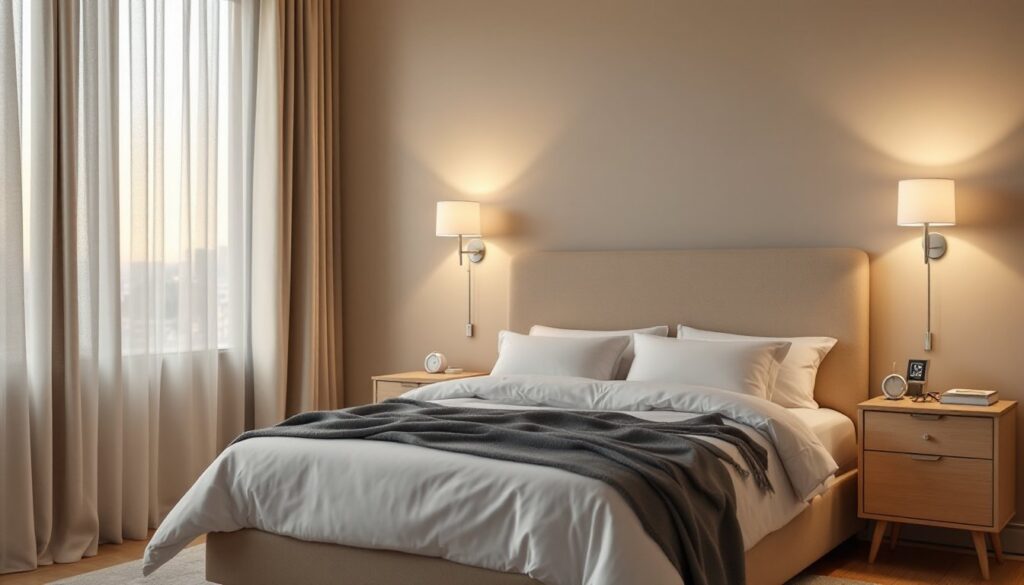
ToggleWall sconces transform bedrooms from basic sleeping quarters into layered, functional spaces. Unlike overhead fixtures that cast harsh shadows or table lamps that eat up nightstand real estate, sconces deliver targeted light exactly where it’s needed, flanking a bed for reading, illuminating a vanity, or highlighting architectural details. They’re also one of the more approachable electrical projects for confident DIYers, especially plug-in models. This guide covers sconce types, placement rules, selection criteria, and step-by-step installation so homeowners can add professional-quality accent lighting without hiring an electrician for every fixture.
Key Takeaways
- Wall sconces for bedrooms provide targeted task lighting without occupying nightstand space, creating a layered, hotel-like aesthetic while keeping cords safely off the floor.
- Mount bedside sconces 55–60 inches from the floor and 18–24 inches from the headboard edge to minimize glare and maximize reading light.
- Swing arm sconces offer superior reading flexibility compared to fixed sconces, allowing light adjustment without disturbing a sleeping partner.
- Plug-in wall sconces are ideal for renters and DIYers, installing in under an hour with basic tools and no electrical expertise required.
- Choose sconce finishes and materials that match existing bedroom hardware and complement your décor style, whether mid-century modern, farmhouse, or contemporary.
- Heavy sconces over 5 pounds and hardwired installations require proper anchoring or professional installation to ensure safety and compliance with electrical codes.
Why Wall Sconces Are Perfect for Bedroom Lighting
Sconces solve the most common bedroom lighting complaints in one fixture. They free up nightstand space that would otherwise hold bulky lamps, making room for alarm clocks, books, and glasses. Mounted at 55–60 inches from the floor (roughly eye level when seated), they put light exactly where readers need it without glare.
Unlike recessed cans or flush-mount ceiling fixtures, sconces create ambient wash along walls, softening hard corners and adding depth. This layered approach, combining overhead lighting with wall-mounted task lights, gives bedrooms a hotel-like polish.
From a practical standpoint, sconces keep cords off the floor and away from vacuums. Hardwired models eliminate outlets entirely, while plug-in versions use a single cord routed behind furniture. They’re also easier to clean than chandeliers and less prone to tipping than floor lamps in homes with pets or kids.
Finally, sconces add symmetry. Flanking a bed with matching fixtures creates visual balance, a trick interior designers use to make rooms feel intentional rather than haphazardly furnished. That symmetry works in rentals too, plug-in sconces offer the same effect without patching drywall when a lease ends.
Types of Wall Sconces for Bedrooms
Swing Arm and Adjustable Sconces
Swing arm sconces extend and retract, directing light exactly where it’s needed. Most models swing out 12–18 inches from the wall and pivot at one or two joints, making them ideal for reading in bed without disturbing a partner.
Look for sconces with metal arms rather than plastic, brass, steel, or aluminum hold up to repeated adjustments. The shade or bulb housing should tilt independently of the arm: cheaper models lock the shade angle, forcing awkward arm positions to redirect light.
Adjustable sconces typically use E26 medium-base bulbs (standard socket size). Choose LED bulbs rated 2700–3000K for warm white light that doesn’t interfere with sleep. Dimmable models add flexibility, though they require compatible bulbs and, for hardwired versions, a dimmer switch on the circuit.
Fixed sconces, those without moving parts, work well for ambient lighting or flanking mirrors. They’re simpler to install and often less expensive, but they sacrifice task-light precision. If the goal is reading light, swing arms win.
Hardwired vs. Plug-In Wall Sconces
Hardwired sconces connect directly to household electrical circuits, eliminating visible cords. They require cutting into drywall to run 14/2 or 12/2 NM-B cable (commonly called Romex) from a junction box or switch. This work falls under the National Electrical Code (NEC) and may require a permit depending on jurisdiction, check with the local building department before roughing in new circuits.
Hardwired installation makes sense during renovations when walls are already open, or in new construction. For existing bedrooms, it’s a bigger commitment: patching, painting, and potentially hiring a licensed electrician if the homeowner isn’t confident working with live circuits.
Plug-in sconces mount to the wall with screws but draw power from a standard outlet. Most include a 6-foot cord with an inline switch or dimmer. They install in under an hour with basic tools, no electrical box, no wire nuts, no permits.
The trade-off is visible cord management. Route cords behind furniture, along baseboards, or inside cable raceways painted to match the wall. Some plug-in sconces include cord covers that mimic the sconce finish, blending the cable into the fixture itself.
Plug-ins are ideal for renters, anyone skittish about electrical work, or bedrooms where running new wire isn’t practical (exterior walls with insulation, or rooms below unconditioned attics). They’re also swappable, swap finishes or styles without calling an electrician.
How to Choose the Right Wall Sconces for Your Bedroom
Start with scale. A sconce’s height and width should balance the wall space and surrounding furniture. For bedside sconces, aim for fixtures 10–14 inches tall and 6–10 inches wide. Anything larger overwhelms a nightstand: smaller fixtures disappear visually.
Match the sconce finish to existing hardware, doorknobs, drawer pulls, curtain rods. Mixing metals works if it’s intentional (e.g., matte black sconces with brass accents), but random finishes read as afterthought. Popular bedroom finishes include brushed nickel, oil-rubbed bronze, matte black, and aged brass.
Shade material affects light quality. Fabric shades diffuse light softly, good for ambient lighting but less effective for reading. Metal or opaque shades direct light up or down, creating dramatic wall wash. Glass or frosted shades split the difference, offering some diffusion while maintaining brightness.
Consider bulb type and accessibility. Sconces with exposed bulbs (Edison-style or globe bulbs) simplify replacement but produce glare if positioned at eye level. Shaded or enclosed fixtures hide the bulb, requiring a reach or screwdriver to swap it out. If changing bulbs is a hassle, choose long-life LED bulbs rated 15,000+ hours.
Finally, think about the room’s overall style. Mid-century modern bedrooms pair well with cone or globe sconces in brass or walnut. Farmhouse styles suit matte black gooseneck or cage fixtures. Contemporary spaces lean toward geometric shapes and mixed materials. If the bedroom already has accent wall treatments, choose sconces that complement rather than compete with that focal point.
Where to Position Wall Sconces in Your Bedroom
For bedside reading, mount sconces 55–60 inches from the floor to the center of the fixture. This puts the bulb roughly at shoulder height when sitting up in bed, minimizing glare and maximizing page illumination.
Space sconces 18–24 inches from the edge of the headboard or nightstand. Closer placement crowds the bed: farther creates dead zones where light doesn’t reach. If using swing arms, add an extra 6 inches to account for the extended arm, otherwise the sconce may hit the headboard.
When flanking a bed, measure carefully to ensure symmetry. Use a laser level or long straightedge to mark both sconce positions simultaneously. Off-center sconces are glaringly obvious and tough to correct once holes are drilled.
For sconces flanking a dresser or vanity mirror, mount them 60–66 inches from the floor, centered on the mirror’s width. Space them 30–36 inches apart (or slightly wider than the mirror). This cross-lighting eliminates shadows on the face, similar to theatrical vanity lighting.
Avoid mounting sconces directly above the bed unless they’re shaded or indirect fixtures. Overhead sconces create glare and unflattering shadows. Similarly, don’t place sconces behind doors or in swing paths, fixtures get knocked and bulbs break.
In small bedrooms, a single sconce on the primary reading side may suffice if space or budget is tight. Pair it with a floor lamp or overhead fixture on the opposite side to maintain balance.
Installing Wall Sconces: A DIY Guide
Tools and Materials:
- Drill/driver with bits (for drywall anchors or wood screws)
- Stud finder (if mounting to studs)
- Laser level or 4-foot level
- Voltage tester (for hardwired sconces)
- Wire strippers and wire nuts (hardwired only)
- Drywall anchors (if not hitting studs), use 50-lb toggle anchors for heavier fixtures
- Screwdriver set
- Pencil
- Safety glasses
For Plug-In Sconces:
- Mark the position using the measurements above. Hold the sconce backplate against the wall and mark mounting holes with a pencil.
- Check for studs with a stud finder. If the mounting holes align with a stud (typically 16 or 24 inches on center), screw directly into the stud using #8 wood screws.
- Install anchors if mounting to drywall. Drill pilot holes, insert toggle or screw-in anchors rated for the sconce’s weight, then attach the backplate.
- Attach the fixture per manufacturer instructions. Most plug-ins slip onto the mounted backplate and secure with a set screw or decorative cap.
- Route the cord along the baseboard or behind furniture. Use adhesive cable clips or a paintable raceway for a cleaner look.
- Plug in and test. Install the bulb and check the switch function.
For Hardwired Sconces (Intermediate Skill):
- Turn off power at the breaker. Use a non-contact voltage tester to confirm the circuit is dead, test both the switch and the box where the sconce will mount.
- Install a junction box if one isn’t present. A single-gang old-work box (also called a cut-in box) mounts in existing drywall without tearing out large sections. Trace the box outline, cut with a drywall saw, and clamp the box to the drywall.
- Run cable from the switch or existing outlet to the new box. If fishing wire through walls feels overwhelming, this is a good time to call a licensed electrician. Improperly secured Romex or connections outside a box violate the NEC and create fire hazards.
- Strip and connect wires. Most sconces use black (hot), white (neutral), and green or bare (ground). Match colors: black to black, white to white, ground to ground. Twist connections clockwise, secure with wire nuts, and tuck into the box. Leave 6 inches of wire extending from the box for easy connection.
- Mount the sconce to the junction box with screws provided (usually 8-32 machine screws). Align the fixture’s mounting bracket with the box’s threaded holes.
- Restore power and test. If the sconce doesn’t light, turn the breaker back off and recheck connections.
Safety Notes:
Always wear safety glasses when drilling overhead. Drywall dust and debris fall directly into eyes.
If the sconce will be installed near a bathroom or within 6 feet of a water source, it must be GFCI-protected per NEC requirements.
Don’t over-tighten screws into drywall anchors, strips the threads. Snug is enough.
For heavy sconces (over 5 pounds), mount to studs or use heavy-duty toggle anchors. Standard plastic anchors fail over time, and a falling sconce is a safety hazard.
Hardwired electrical work may require a permit and inspection, especially if adding new circuits or junction boxes. Verify local codes before starting.